Bedding & Bedroom Styling
Building a Layered Bedroom with Textured Bedding
A beautifully layered bed isn’t about matching every piece. It’s about combining considered colors, contrasting surfaces, and useful weights to create a bedroom that feels inviting, personal, and ready for the changing seasons.
Published October 16, 2026
A well-dressed bed has a way of making a whole room feel more settled. But the secret isn’t a perfectly coordinated set or a stack of pillows arranged with ruler-straight precision. The most appealing beds often mix materials and finishes: a soft, lightly rumpled sheet beneath a crisp cover, perhaps, or a nubby blanket folded across the foot. The result has depth without looking overworked—and feels as good at bedtime as it looks in the morning.
That balance is at the heart of textured bedding. Weave, weight, and finish each change the way a textile looks and behaves. Smooth cotton can make a visual pause between more expressive surfaces. A raised waffle weave catches light and gives a bedcover definition. A warm, tactile throw adds a final layer that can be pulled close when the room cools. Think of the bed as a small composition, with each piece bringing a different note to the arrangement.
Society Limonta’s range of bedding and throws offers a useful way to explore these ideas. Linen sheets, cotton covers, woven bedcovers, and wool-rich blankets each have distinct roles, and they don’t have to be used all at once. With a clear palette and a few thoughtful contrasts, it’s possible to create a bed that feels cohesive while remaining easy to adjust from season to season.
Start with comfort, then build the look
The most successful bedroom styling starts with what touches the body. Sheets set the foundation for nightly comfort, so their fiber and finish matter more than any decorative flourish. Linen, for instance, is known for its relaxed surface and breathable feel. Its characteristic texture brings an unfussy quality to a bed, making it a natural starting point for a layered look that isn’t too formal.
Society Limonta’s Rem fitted sheets are made from 100% linen and finished with a soft froissé texture. The garment-dyed fabric has a nuanced appearance, while the relaxed finish means the sheet can look at home in a bedroom that favors ease over crisp, pressed perfection. Rem linen is described as thermo-regulating and suitable for all seasons, and the sheets are washable without requiring ironing—a practical detail for anyone who prefers to spend less time maintaining a polished bed.
A fitted sheet gives the mattress a neat base, while a flat sheet can introduce another visible plane and a more traditional finishing touch. The Rem Flat Sheet shares the collection’s 100% linen and froissé surface, with a wide border finished on all four sides. That border is more than a small construction detail: when turned back, it creates a clean, framed edge that adds definition without introducing a new pattern or color.
When choosing a foundation, consider the feel you want to return to every night. A smooth, cool surface may be your priority; someone else may appreciate linen’s more textured hand. Neither has to dictate the entire bedroom. A contrasting sheet can be covered by a duvet, revealed at the fold, or allowed to become part of the room’s palette. Start with the fabric you enjoy sleeping on, then use the upper layers to add warmth and character.
Let weave do some of the decorating
Texture doesn’t have to mean bold pattern. A weave can create visual movement through raised loops, a subtle relief, a softly crinkled finish, or a surface that changes in the light. These small differences are especially useful when a bedroom palette stays quiet. Cream, sand, muted green, soft blue, and warm gray can feel far from plain when their fabrics have distinct surfaces.
A bedcover is a natural place to introduce a more pronounced weave. Society Limonta’s Tex Bedcover is made from pure cotton with a three-dimensional waffle weave and a loom-woven border. The waffle surface gives the textile structure and depth, while the border provides a more orderly edge. At 380 g/m², it is described as lightweight and well suited to summer nights, making it a useful option when a heavy cover would feel out of place.
For an even lighter effect, the Free New Bedcover is made from four extra-thin layers of cotton voile. Its slightly raised pattern brings dimension to an otherwise airy construction. It’s a reminder that texture and warmth are not the same thing: a surface can feel visually rich while remaining light enough for a summer bed. That distinction helps prevent a layered arrangement from becoming too bulky.
When combining weaves, look for contrast rather than competition. A gently rumpled linen sheet can sit beneath a more defined waffle bedcover. A plain duvet can give a patterned or raised cover room to stand out. If every layer has a strong surface, the bed may begin to feel busy; if every layer is smooth, the arrangement may lack dimension. Alternating quiet and expressive textures gives the eye somewhere to rest.
Use weight to make layers work harder
Weight is both a styling tool and a comfort decision. A light cover offers an easy top layer for warmer weather. A denser blanket can add warmth when temperatures drop. Between them, a medium-weight textile can help the bed feel finished without turning it into an all-or-nothing seasonal setup.
The practical approach is to choose layers that can be added or removed independently. On a mild evening, the sheet and a light cover may be enough. When the room gets cooler, a blanket can be folded across the bed or pulled over the duvet. This flexibility means the bed can respond to changing temperatures without requiring a complete change of bedding every time the weather shifts.
Texture can help signal those different roles. Light cotton voile reads as airy and easy. A cotton waffle weave brings a little more presence. A wool-rich layer looks and feels more substantial. Each textile contributes its own character, so the bed can look considered even when only some of its layers are in use.
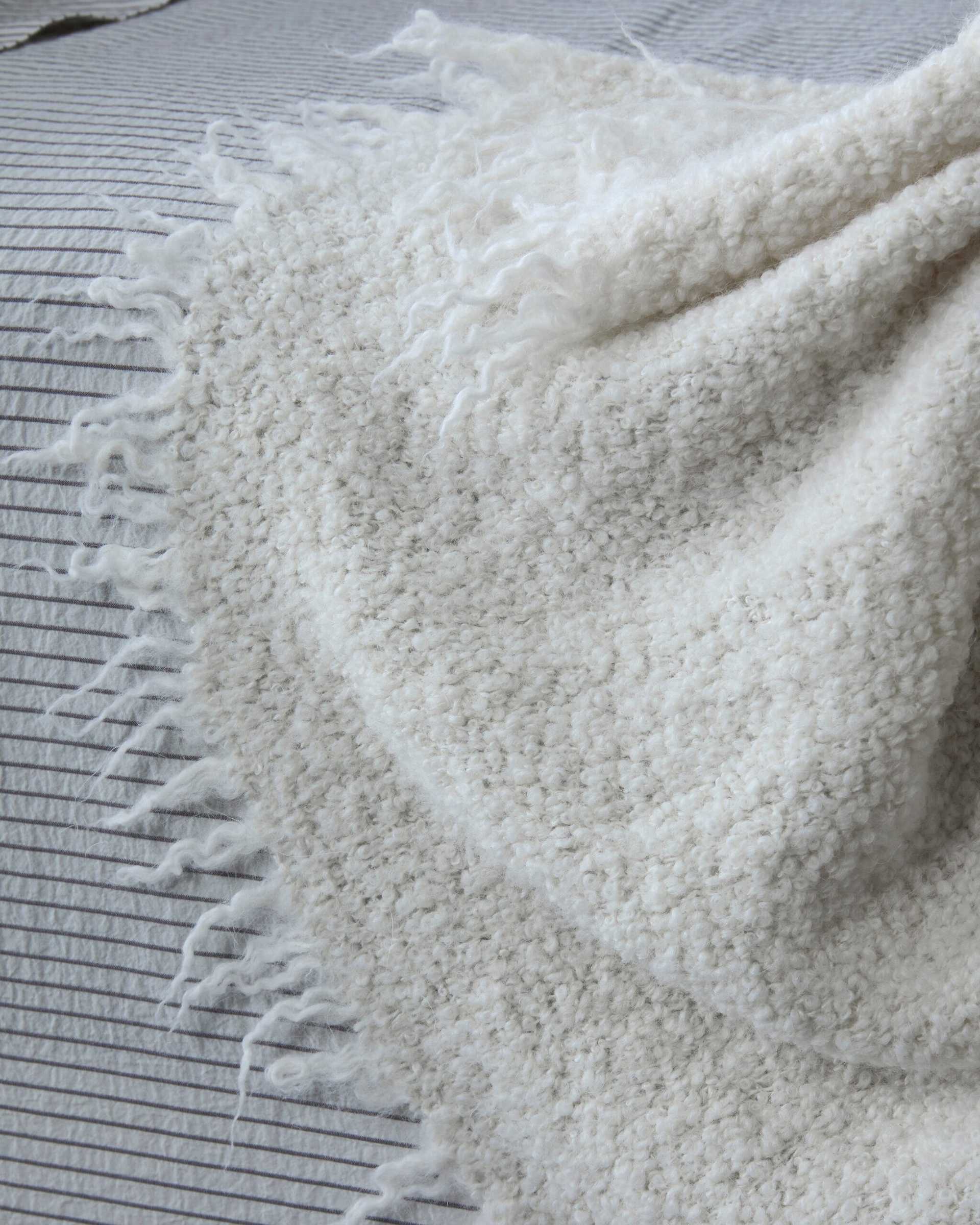
The Tuis Blanket is made from 70% alpaca and 30% wool, with a bouclé construction and frayed edges. Its 250 g/m² weight and warm, cozy character make it better suited to colder months than a light summer cover. Large enough to cover a bed, it can serve as a substantial top layer; folded at the foot, it offers a tactile accent that can be brought up when extra warmth is welcome.
For a lighter decorative layer, the Maltinto Ted Throw is made from 100% alpaca and has a lightweight 64 g/m² fabric. Its irregular, worn appearance comes from an artisanal airbrush process. Draped over a bed or sofa, it can bring a softer, more relaxed finish without the bulk of a heavier blanket. The contrast between a light throw and a dense bedcover can make the layers feel purposeful rather than redundant.
Choose a palette that leaves room for contrast
Color is what helps different materials feel like they belong together. A restrained palette doesn’t need to mean identical shades; it can include neighboring tones that share a similar temperature. Ivory, oatmeal, and warm gray, for example, create a quiet foundation. Soft blue or muted green can introduce a cooler accent. A deeper shade used sparingly—a folded throw or a pillowcase—can give the arrangement a focal point.
One useful technique is to repeat a color in two different textures. A muted tone might appear in a smooth sheet and again in a more tactile blanket. The repeated color creates a connection, while the change in surface keeps the bed from looking too uniform. Conversely, two different colors can feel harmonious when their materials are similar in depth and softness.
Garment-dyed textiles are particularly appealing in a layered bedroom because their color can appear nuanced rather than perfectly flat. The Rem linen sheets, for example, are garment dyed for a natural, varied appearance. A gentle variation in tone can help linen sit comfortably beside a solid cotton cover or a textured throw, giving the arrangement a lived-in quality without adding a busy print.
Before adding a new color, take a look at the room around the bed. Curtains, flooring, painted walls, and upholstery all contribute to the overall palette. Bedding doesn’t need to match these elements exactly, but it can borrow one or two tones from them. That small connection often makes the bed feel integrated with the room instead of styled as a separate display.
Make the arrangement feel relaxed, not staged
There’s a difference between a bed that looks thoughtfully layered and one that looks as though it can’t be touched. A relaxed finish leaves room for everyday life. A duvet can be folded back rather than squared to the millimeter; a throw can rest casually across the foot; a textured cover can be allowed to show its natural surface rather than being smoothed flat.
That doesn’t mean every crease or fold needs to be treated as a styling choice. It simply means that a room can feel polished without feeling precious. Linen’s soft, crinkled surface is especially forgiving in this respect. A cover with a raised weave can also hold visual interest without needing a precise arrangement. Allow the character of each textile to do some of the work.
Keep the number of layers in proportion to the bed and the room. A low-profile bed may benefit from a cover that drapes cleanly, while a larger bed can accommodate a blanket folded across the foot without feeling crowded. If there are already patterned curtains or a richly colored wall, quieter bedding may be the more restful choice. The aim is not to display every favorite textile at once; it’s to create a comfortable setting with enough detail to feel personal.
A simple formula for a flexible layered bed
There’s no single right way to layer bedding, but a simple sequence can make decisions easier. Begin with the sheet you enjoy sleeping on. Add a primary cover suited to the season. Finish with a secondary layer that brings either texture, warmth, or a small shift in color. Each piece should have a purpose, even if that purpose is simply making the room feel more inviting.
- Build from the base. Choose fitted and flat sheets for comfort, feel, and ease of care.
- Add a cover that suits the temperature. Cotton voile or a light weave can keep a summer bed feeling open.
- Introduce one noticeable texture. A waffle bedcover or a bouclé blanket adds depth without requiring a bold print.
- Keep a removable layer nearby. A throw or blanket can be folded at the foot for cooler nights.
- Repeat a color or material. A small echo across the bed helps different textiles feel connected.
For example, a relaxed linen foundation could be paired with a light cotton cover, then finished with a textured bedcover or seasonal blanket. In warmer months, a cotton voile layer can supply interest without too much insulation. In colder weather, a substantial wool-rich blanket can take on a more prominent role. The pieces don’t need to come from the same set; a shared palette and complementary weights are often enough.
Care is part of good bedroom styling
Beautiful bedding should be pleasant to live with, not just pleasing to look at. Before washing or cleaning any textile, follow the care instructions supplied with that item. Fibers and finishes behave differently, and a blanket that calls for dry cleaning should not be treated like an everyday washable sheet. When possible, store seasonal pieces clean and completely dry, and avoid compressing delicate textiles for long periods.
For frequently used sheets, straightforward care can make the routine feel manageable. Rem linen is described as washable and does not require ironing, a useful fit for anyone who likes a softer, more relaxed bed. Other pieces may have different requirements, so check each product’s specific instructions rather than assuming that all cotton, wool, or blended textiles can be handled in the same way.
Care also helps preserve the character that makes textured bedding appealing. Gentle handling can support a fabric’s surface and drape, while suitable storage can help blankets keep their loft between seasons. With a few thoughtful choices, the bed stays inviting without turning everyday maintenance into a project.
A bedroom that changes with you
The best layered bedrooms aren’t fixed arrangements. They shift with the season, the temperature, and the way you want the room to feel. A bed that’s light and open in summer can become warmer and more enveloping in winter, simply by changing which cover sits on top. A familiar palette provides continuity, while different weaves and weights make the room feel refreshed.
That’s the quiet appeal of textured bedding: it offers variety without demanding a dramatic makeover. Linen brings a relaxed foundation. Cotton covers can add lightness or structure. A waffle weave introduces a raised pattern without visual clutter. Throws and blankets bring warmth, softness, and an easy finishing touch. Together, these materials make a bed feel layered in the fullest sense—considered, comfortable, and ready for real life.
Start with the surface you want to sleep on, add only the layers that improve comfort, and let texture create the rest of the interest. The result doesn’t need to be perfectly matched. It needs to feel like a room you’re happy to return to at the end of the day.